CASE STUDY
We boosted Shiseido’s training engagement with a social, gamified learning app.

Author
The #1 AI-powered authoring tool on the market

Factory
Custom e-learning content factory

Skills
Comprehensive power skills course catalog

LMS
All-in-one LMS platform with AI

Engage
App for managing frontline teams

Game
Gamification app for business
FEATURES

AINew
Unlock your full potential and speed up course creation with artificial intelligence.

Accessibility
Automatically meet accessibility guidelines—without sacrificing interactivity!

Interactivity
Boost engagement with interactive, ready-to-use activities that make learning fun.

Course Creation
Reduce the time it takes to create your e-learning courses with our authoring tool.

Distribution
We offer you different distribution options, so that nothing can stop you.

SCORM
Publish your course in SCORM format and share it on any LMS.
SERVICES

Instrucional Design
Surprise your students with multimedia and interactive content.

Custom Courses
We create e-learning courses for you—tailored to your needs and hassle-free!

Virtual Reality
Turn learning into an immersive experience.

Custom Avatars
Give your courses and videos a unique touch with personalized avatars.

Audiovisual FactoryNew
Turn training into something dynamic and visual with engaging videos.
CATALOG
Course catalog
Over 600 skills and competency courses to help you adapt to your team's needs.

Microsoft Copilot AcademyNew
Your professionals will learn how to apply Copilot AI to key processes within your organization.
Artificial Intelligence Academy
Train your teams in the practical use of AI to boost productivity and innovation in your company.

Cybersecurity Academy
Capacita a tu empresa con el catálogo más completo en seguridad digital corporativa.
FEATURES

Quizzes & Games
Turn your training into an engaging Q&A game.

Challenges & Competitions
Enhance learning through friendly peer challenges.
Rewards & Incentives
Motivate employees with points, levels, and leaderboards.
Social & Collaborative
Strengthen team connections with interactive social dynamics.

KPIs & Analytics
Track and optimize your training initiatives instantly and effortlessly.

Use cases
Choose the solution that best fits your needs

Industries
Solutions for all types of industries
USE CASES
Onboarding
Facilitate the onboarding process, productivity and engagement of your new employees.
Upskilling
Boost your team's skills and prepare them for the challenges of the future with upskilling.
Microlearning
Discover all the advantages of microlearning and boost your training results.
Gamification
Enjoy addictive training that will get your professionals hooked.

Internal Communication
Improve communication in your company and enjoy an aligned and committed team.

Mobile learning
Agile, flexible, and interactive learning—built for today’s digital-first workforce.
INDUSTRIES

Banking and financial services
Training in compliance, cybersecurity, customer service, and key skills development.

Pharmaceuticals and healthcare
Digital onboarding, regulatory updates, and ongoing training for healthcare staff.

Retail and consumer
Agile and scalable training for in-store, operational, and customer service teams.

Industry and manufacturing
Training in processes, safety, and corporate culture for distributed teams.

Education and training
Digital solutions for training centers, internal academies, and corporate universities.

Technology and telecommunications
Development of technical talent, digital skills, and upskilling and reskilling programs.
CLIENTS

MAPFRE
How MAPFRE turn e-learning into sales with isEazy

Pepco
A personalised learning experience for a growing team.

BBVA
Digitisation and creation of high quality e-learning content.

Shiseido
We increase the engagement of the training with a social and gamified app.

Telefónica
Large-scale reskilling for the company's digital transformation.

Vodafone
A personalised learning experience for a growing team.
More than 1,000 companies already rely on isEazy.





MEET ISEAZY

News
Find out the latest news about isEazy: press releases, partnerships, updates...

Contact
Leave us your personal details and we will contact you as soon as possible.
About isEazyNew
Find out more about our company.
Careers
We are looking for the best talent, join our team!

Partners
Become our partner and grow your business.
INTERESTING RESOURCES

Blog
The best content on e-learning: trends, tools and key strategies.
Whitepapers
Gain valuable insights and stay ahead of industry trends.
Product releases
The latest news and releases of our e-learning products and solutions.

Glossary
Definitions of the most commonly used terms and key industry concepts.
Guides
Discover the best step-by-step tips and tricks to optimize your L&D strategy.
Webinars
Video sessions on our products, trends and more

Comparatives
Compare e-learning solutions available on the market and choose the most suitable one.

STUDY
Download the free study, developed in collaboration with Microsoft, and discover the insights.

March 10, 2026

CONTENT CREATED BY:

Table of contents
The brain-based learning —or brain-based learning— is an educational approach that designs the learning experience by aligning it with how the human brain naturally processes, organizes, and retains information. In corporate training, this translates into shorter programs that are more motivating and achieve higher long-term retention rates.
This approach is based on understanding the human brain and its neurological processes in order to design more effective learning strategies. Brain-based learning starts from a key premise: each person has a unique brain, and learning is a complex process that involves the interaction of different brain areas simultaneously.
The model, popularized by researchers such as Renate and Geoffrey Caine in the 1990s, aims to ensure that educational methods and practices are aligned with how the brain actually processes information. Its fundamental principles include:
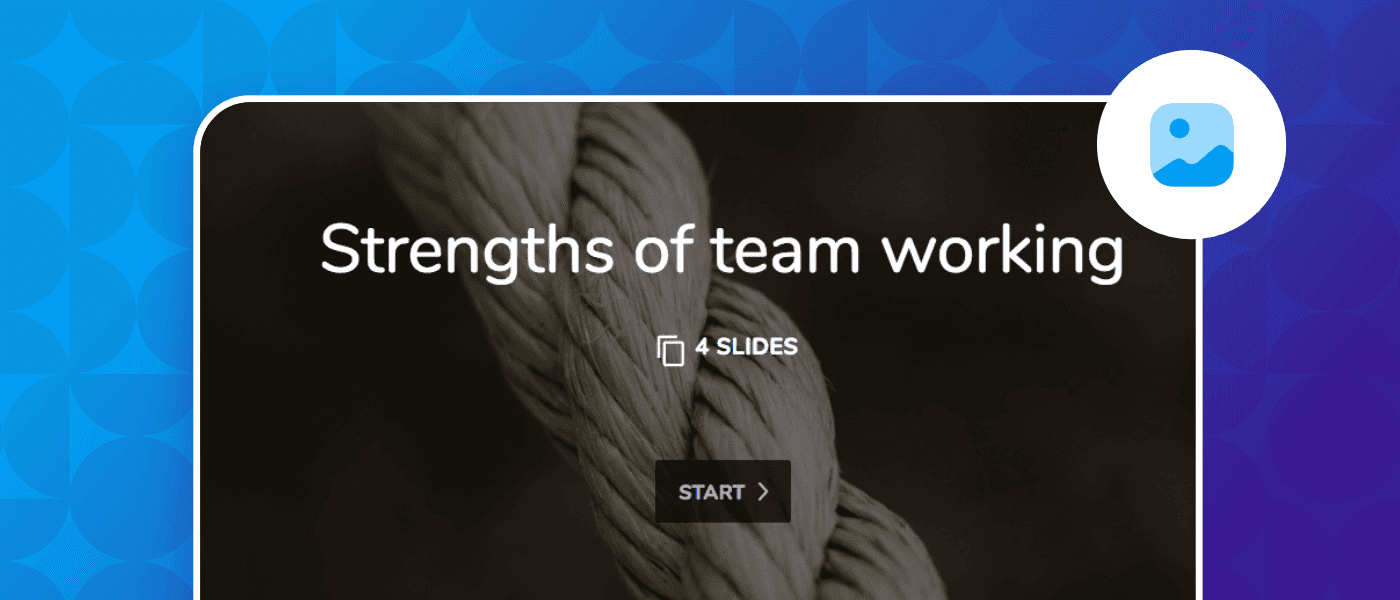
Shiseido, a cosmetics company with more than 150 years of history and presence in over 120 countries, needed a solution to train its extensive network of collaborators at points of sale, geographically dispersed and with very diverse profiles. Traditional classroom-based training had stopped being viable to keep the entire team updated and connected.
They opted for a social and gamified app —isEazy Engage— that centralized corporate knowledge in small interactive content bites, accessible anytime and anywhere. The combination of microlearning, gamification, and social dynamics among colleagues activated precisely the mechanisms that brain-based learning aims to enhance: active processing, intrinsic motivation, and collaborative learning.
The results were compelling: knowledge retention above 90% and more than 1,000 challenges completed voluntarily, reflecting a level of engagement that is difficult to achieve with passive training methods.
CASE STUDY
We boosted Shiseido’s training engagement with a social, gamified learning app.



Taking into account the principles of brain-based learning, these are the six strategies with the greatest impact in corporate online training:
This strategy is based on distributing learning into short sessions over time rather than concentrating it in a single long session. Three 15-minute sessions spread over a week are significantly more effective than a single 45-minute session: distributed learning strengthens long-term memory by leveraging the sleep consolidation effect and the reactivation of neural networks.
In practice, an LMS allows this process to be automated through scheduled reinforcement paths and automatic reminders.
This strategy is based on grouping information into small, cognitively manageable fragments. In 1956, psychologist George Miller identified that human working memory can handle approximately 7±2 pieces of information simultaneously. Dividing content into coherent thematic units that are connected to each other reduces cognitive load and improves understanding.
Microlearning is the most direct expression of this strategy in e-learning: modules of no more than 10–15 minutes that, when sequenced, build a broader unit of knowledge. The key is not only the duration, but the internal coherence of each fragment.
The third strategy focuses on activities where the learner creates, teaches, or experiments in real contexts. This practice reinforces learning because the active generation of content—explaining in your own words, creating examples, or applying knowledge to a case—activates deeper neural networks than passive reading alone.
In corporate training, it works especially well in compliance programs and soft skills development: forums where participants explain a concept to a colleague, or interactive videos with decision points that require learners to reason and choose.
This strategy consists of actively retrieving information from memory without having the material in front of you. Quizzes, self-check tests, fill-in-the-blank exercises, or matching activities all force the brain to recall the information and reconstruct it, strengthening the neural connections associated with that knowledge.
In e-learning, quizzes with immediate feedback are the most effective mechanism, especially when they appear at the end of each module and in later reinforcement sessions.
Metaphors connect new concepts with knowledge structures that already exist in the brain, making it easier to understand unfamiliar processes through familiar analogies. Metacognition—the ability to reflect on one’s own learning process—complements this strategy: activities that encourage learners to ask themselves “what have I learned?” or “how would I apply this to my work?” activate awareness of their own learning. Branching scenarios or decision-making scenarios are ideal tools for working on both dimensions.
Group activities and those that involve sharing with others improve learning because they activate the brain’s social processing, which is neurologically designed to learn from and with others. According to the 70-20-10 model, 20% of what we learn comes from the experience of others: conversations, observation, and collaboration.
Online training platforms provide the ideal environment for this strategy: discussion forums, peer review activities, group challenges, and shared reflection spaces. The key is to design interaction with a clear purpose, rather than adding collaboration as a decorative element.
The six strategies we have explored do not operate in isolation: each responds to a specific cognitive mechanism and has a direct translation in the design of online training. This summary highlights the key aspects of each one.
| Strategy | Cognitive Benefit | How to Apply in E-learning |
|---|---|---|
| Spaced repetition | Consolidates long-term memory | Automated reinforcement paths in the LMS |
| Chunking | Reduces cognitive load | 10–15 minute microlearning modules |
| Generative learning | Activates deep processing | Case studies, forums, interactive videos |
| Strategy | Cognitive Benefit | How to Apply in E-learning |
|---|---|---|
| Retrieval practice | Strengthens neural pathways (+50% retention) | Quizzes with immediate feedback |
| Metaphors and metacognition | Anchors learning to prior knowledge | Decision scenarios, guided reflection |
| Collaborative learning | Activates social processing | Forums, peer review, group challenges |
Brain-based learning is not a traditional instructional design model, but rather a framework of neuroscience-based principles that can be applied on top of any existing methodology. The following table shows how it relates to the most widely used models in L&D:
| Model | What it Defines | Relationship with Brain-Based Learning |
|---|---|---|
| ADDIE | Linear instructional design process | BBL enriches the Design phase with neuroscientific principles |
| 70-20-10 | Where learning occurs | BBL optimizes how learning happens across the three contexts |
| Kolb Cycle | Stages of experiential learning | BBL reinforces different phases: experience, reflection, and application |
Brain-based learning is not an educational trend: it is the practical application of decades of research in cognitive neuroscience to the design of learning experiences. Its six strategies provide L&D teams with a solid framework for making instructional design decisions based on scientific evidence.
The advantage for corporate training leaders is that none of these strategies require new infrastructure: they require an authoring tool that allows interactive content to be designed with these principles built in, and an LMS platform that enables spaced distribution, tracking, and collaboration. isEazy Author and isEazy LMS are designed so that training teams can implement these strategies without needing advanced technical knowledge.
Brain-based learning starts from how the brain actually works—considering factors such as emotions, memory, attention, and context—to design the learning experience. Traditional teaching methods often overlook these elements and rely on linear repetition and passive instruction. As a result, brain-based learning tends to generate stronger long-term retention, greater intrinsic motivation, and more effective knowledge transfer to the workplace.
You don’t need to be a neuroscientist to apply it. What it does require is reviewing instructional design with questions like these: Is the content delivered in manageable chunks? Are there moments of active retrieval (questions, self-assessments)? Does the learning experience address emotion and relevance? Does it encourage collaboration? An LMS platform with microlearning capabilities, integrated assessments, and social learning features can make implementation much easier without requiring technical expertise in neuroscience.
Yes, and the results are quite concrete. A study by Roediger and Karpicke (2006) showed that learners who practiced active retrieval retained up to 50% more information one week later than those who only reread the material. Spaced repetition, meanwhile, can reduce the time needed to reach the same level of mastery by up to 75% compared with massed study, according to research on the spacing effect (Cepeda et al., 2006). In corporate training, this translates into shorter, more effective programs with a better return on investment.
These strategies are fully applicable in e-learning and, in many cases, technology actually makes them easier to implement than in a traditional classroom. Spaced repetition can be automated through reminder systems and reinforcement paths in an LMS. Microlearning and content chunking are the foundation of well-designed modern courses. Retrieval practice can be easily implemented through interactive quizzes. Collaboration can be encouraged through forums, group activities, and comments within the platform. The key is to design the course with these strategies in mind from the beginning, rather than adding them as an extra layer at the end.
WHITEPAPER
Find out how digital transformation is reshaping key skill training in this whitepaper.
Download whitepaper


Turn concepts into real-world skills
Put theory into practice with isEazy Skills, the most comprehensive power skills course catalog on the market.


Turn concepts into real-world skills
Put theory into practice with isEazy Skills, the most comprehensive power skills course catalog on the market.