CASE STUDY
How Clarel achieved over 84% engagement in their training with gamification.

Author
The #1 AI-powered authoring tool on the market

Factory
Custom e-learning content factory

Skills
Comprehensive power skills course catalog

LMS
All-in-one LMS platform with AI

Engage
App for managing frontline teams

Game
Gamification app for business
FEATURES

AINew
Unlock your full potential and speed up course creation with artificial intelligence.

Accessibility
Automatically meet accessibility guidelines—without sacrificing interactivity!

Interactivity
Boost engagement with interactive, ready-to-use activities that make learning fun.

Course Creation
Reduce the time it takes to create your e-learning courses with our authoring tool.

Distribution
We offer you different distribution options, so that nothing can stop you.

SCORM
Publish your course in SCORM format and share it on any LMS.
SERVICES

Instrucional Design
Surprise your students with multimedia and interactive content.

Custom Courses
We create e-learning courses for you—tailored to your needs and hassle-free!

Virtual Reality
Turn learning into an immersive experience.

Custom Avatars
Give your courses and videos a unique touch with personalized avatars.

Audiovisual FactoryNew
Turn training into something dynamic and visual with engaging videos.
CATALOG
Course catalog
Over 600 skills and competency courses to help you adapt to your team's needs.

Microsoft Copilot AcademyNew
Your professionals will learn how to apply Copilot AI to key processes within your organization.
Artificial Intelligence Academy
Train your teams in the practical use of AI to boost productivity and innovation in your company.

Cybersecurity Academy
Capacita a tu empresa con el catálogo más completo en seguridad digital corporativa.
FEATURES

Quizzes & Games
Turn your training into an engaging Q&A game.

Challenges & Competitions
Enhance learning through friendly peer challenges.
Rewards & Incentives
Motivate employees with points, levels, and leaderboards.
Social & Collaborative
Strengthen team connections with interactive social dynamics.

KPIs & Analytics
Track and optimize your training initiatives instantly and effortlessly.

Use cases
Choose the solution that best fits your needs

Industries
Solutions for all types of industries
USE CASES
Onboarding
Facilitate the onboarding process, productivity and engagement of your new employees.
Upskilling
Boost your team's skills and prepare them for the challenges of the future with upskilling.
Microlearning
Discover all the advantages of microlearning and boost your training results.
Gamification
Enjoy addictive training that will get your professionals hooked.

Internal Communication
Improve communication in your company and enjoy an aligned and committed team.

Mobile learning
Agile, flexible, and interactive learning—built for today’s digital-first workforce.
INDUSTRIES

Banking and financial services
Training in compliance, cybersecurity, customer service, and key skills development.

Pharmaceuticals and healthcare
Digital onboarding, regulatory updates, and ongoing training for healthcare staff.

Retail and consumer
Agile and scalable training for in-store, operational, and customer service teams.

Industry and manufacturing
Training in processes, safety, and corporate culture for distributed teams.

Education and training
Digital solutions for training centers, internal academies, and corporate universities.

Technology and telecommunications
Development of technical talent, digital skills, and upskilling and reskilling programs.
CLIENTS

MAPFRE
How MAPFRE turn e-learning into sales with isEazy

Pepco
A personalised learning experience for a growing team.

BBVA
Digitisation and creation of high quality e-learning content.

Shiseido
We increase the engagement of the training with a social and gamified app.

Telefónica
Large-scale reskilling for the company's digital transformation.

Vodafone
A personalised learning experience for a growing team.
More than 1,000 companies already rely on isEazy.





MEET ISEAZY

News
Find out the latest news about isEazy: press releases, partnerships, updates...

Contact
Leave us your personal details and we will contact you as soon as possible.
About isEazyNew
Find out more about our company.
Careers
We are looking for the best talent, join our team!

Partners
Become our partner and grow your business.
INTERESTING RESOURCES

Blog
The best content on e-learning: trends, tools and key strategies.
Whitepapers
Gain valuable insights and stay ahead of industry trends.
Product releases
The latest news and releases of our e-learning products and solutions.

Glossary
Definitions of the most commonly used terms and key industry concepts.
Guides
Discover the best step-by-step tips and tricks to optimize your L&D strategy.
Webinars
Video sessions on our products, trends and more

Comparatives
Compare e-learning solutions available on the market and choose the most suitable one.

April 2, 2026

CONTENT CREATED BY:

Table of contents
Reinforcement activities are one of the most effective resources in corporate e-learning course design: they allow you to measure, consolidate, and activate learner knowledge at the precise moment it is most needed — not just at the end of the course. Yet their potential goes far beyond simple self-assessment.
E-learning reinforcement activities are interactive learning exercises in various formats — grouping, question-answer, fill-in-the-blank, true/false, or gamified games — designed to test and consolidate learner knowledge during the course, not just at the end.
Unlike a final test, which covers all the content of a module or complete course, each reinforcement activity focuses on a specific concept: the key element the learner needs to internalize before continuing. This makes them intelligent checkpoints that improve both retention and learner engagement throughout the learning journey.
The science of learning supports their use. According to Ebbinghaus’s forgetting curve, without active review we can forget the majority of what we’ve learned within the first 24–48 hours. Reinforcement activities act as that review: by forcing learners to actively retrieve information (active recall), neural connections are strengthened and long-term retention improves. Studies in cognitive psychology, such as those by Roediger and Karpicke (2006), show that actively retrieving information produces up to twice the retention compared to simply re-reading the same content.
We can include reinforcement activities at three moments within an e-learning course:
If your course aims to start from each learner’s actual level, diagnostic activities are the first step. Placed at the beginning of the course or a module, they help identify which concepts participants already master and which need more depth. The most common formats for this purpose are multiple-choice questionnaires and true/false exercises, which provide quick and clear measurement. In employee training activities, this type of prior diagnosis is especially valuable for personalizing learning paths in teams with heterogeneous skill levels.
If the course objective is to change behaviors or break incorrect prior learning, true/false activities are particularly effective. By presenting the learner with a statement they believe to be true — but which the course will challenge — a cognitive tension is created that increases attention and predisposes toward change. This technique works very well in compliance, safety, or cultural change training, where myths and resistance are the main obstacles to learning.
Branching scenarios are also a very powerful option for this objective: the learner makes a decision and sees the consequences, allowing them to learn from mistakes in a safe environment.
Especially in long courses, continuous theory generates cognitive fatigue and reduces concentration. Replacing — or complementing — dense content blocks with interactive activities keeps the learner active and prevents superficial text scanning. This is the essence of active learning: instead of reading a definition and moving on, the learner must apply it, classify it, or relate it before continuing.
Combining activities with other resources such as e-learning video further enhances this effect: a short explanatory video followed by a comprehension activity is one of the combinations with the greatest impact on retention, according to research on multimedia instruction (Mayer, 2009).
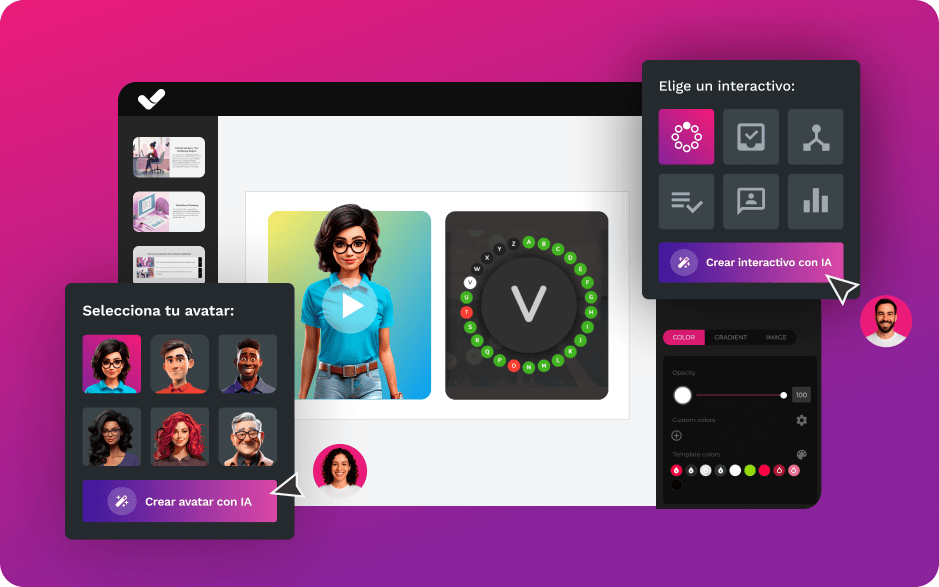
Not all activities work equally well for every objective. This table helps you choose the right format based on what you want to achieve at each point in the course:
| Activity type | Pedagogical objective | When to use it |
|---|---|---|
| True / False | Challenge beliefs or prior habits | At the start of the module or before presenting theory |
| Fill in the blanks | Fix vocabulary and key concepts | Immediately after explaining the concept |
| Group / Classify | Understand relationships and categories | After sections covering several related concepts |
| Question-answer | Verify general comprehension | As a block wrap-up or mid-course checkpoint |
| Games (Rosco, Trivial…) | Consolidate and motivate through gamification | At the end of a module or as a final review activity |
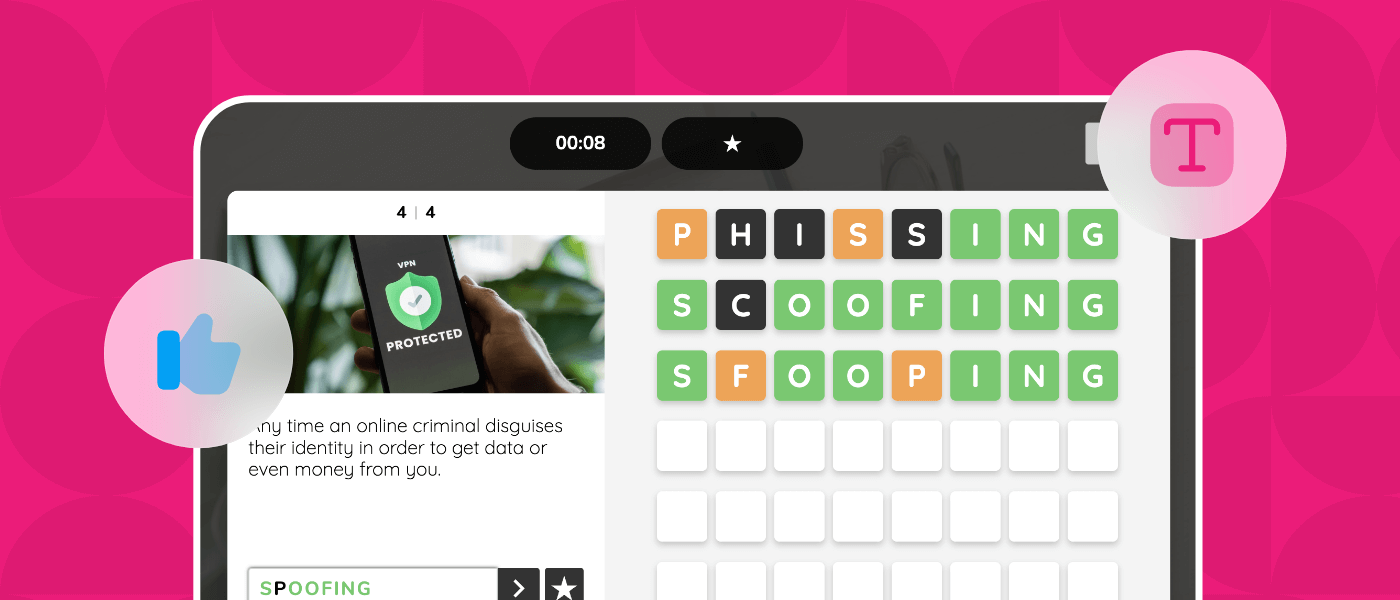
In addition to classic interactive exercises, isEazy Author includes a selection of games you can use directly as gamified reinforcement activities within your courses. They are especially useful for review modules, section wrap-ups, or as a dynamic alternative to a conventional test:
All these games allow you to customize the available time, hints, and difficulty level. Tip: combine games with other resources like a video prior to the activity to create a complete and memorable learning experience.
The timing of a reinforcement activity is not arbitrary: it should respond to the logic of learning, not to the structure of the course. These are the most important criteria:
Even with the best intentions, there are patterns that reduce the effectiveness of reinforcement activities. These are the most frequent among L&D teams:
Good activity design doesn’t end when the course is published. Measuring its real impact allows you to continuously optimize instructional design. These are the key indicators to monitor from your LMS:
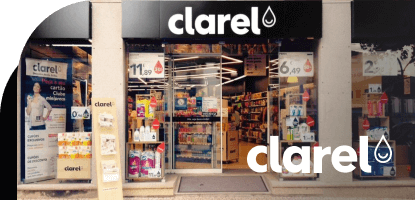
Clarel, a Spanish drugstore and perfumery chain with a presence in more than 300 stores, is a great example of how gamified reinforcement activities can transform training in a distributed retail environment. With isEazy, Clarel trains its point-of-sale professionals simultaneously, combining microlearning, gamification, and interactive activities to maintain engagement in geographically dispersed teams.
Discover how they did it →
CASE STUDY
How Clarel achieved over 84% engagement in their training with gamification.


If you want to see in practice how to design and integrate reinforcement activities into your e-learning courses, we have a specific resource for you. In our webinar on how to create reinforcement activities for your e-learning courses, we walk through the complete process with real examples in isEazy Author: from choosing the format to configuring conditional navigation.
Reinforcement activities in e-learning are interactive exercises — in formats such as true/false, fill-in-the-blanks, grouping elements, or gamified games — designed to consolidate learner knowledge during the course itself, not just at the end. Their function goes beyond self-assessment: they combat the forgetting curve described by Ebbinghaus, according to which without active review we can lose a large portion of what we’ve learned within the first few hours. By inserting activities at key moments in the learning journey, the learner processes information actively, identifies their own knowledge gaps, and advances with greater confidence toward the final assessment.
The general rule is to include a reinforcement activity after each key content block, especially when working with a concept the learner needs to internalize before moving on. In longer courses with multiple modules, the ideal approach is to include at least one activity per module and, if the content is particularly dense, add micro-activities in between that function as checkpoints. This helps learners receive immediate feedback on their understanding and avoid accumulating doubts until the final test. Frequency should be guided by the pedagogical objective, not by the length of the course.
The most effective formats combine cognitive challenge with a playful component. Gamified activities such as Rosco, Trivial, or Memory create a dynamic experience that breaks the monotony of linear training. True/false exercises work especially well for challenging prior beliefs and prompting active reflection. Fill-in-the-blank and grouping activities encourage deep understanding over mere text scanning. The key is to vary the format throughout the course: always using the same type of activity reduces the motivational effect over time.
isEazy Author offers a complete library of reinforcement and interactive activities that integrate directly into the course flow without any coding required. From grouping, fill-in-the-blank, and multiple-choice exercises to games like Rosco, Swipe, Trivial, and Memory, instructional designers can configure each activity in minutes and customize difficulty, hints, and time limits. The platform also supports conditional navigation: if a learner does not pass an activity, the system can redirect them to review the content before continuing, automatically adapting the learning experience to each individual.

WEBINAR ONDEMAND
Games, exercises, and assessments automatically generated with isEazy Author’s AI.
Watch webinar


Create visual, interactive courses that drive real impact
Discover isEazy Author, the most intuitive authoring tool to turn your content into engaging and effective learning experiences.

Create visual, interactive courses that drive real impact
Discover isEazy Author, the most intuitive authoring tool to turn your content into engaging and effective learning experiences.