CASE STUDY
We helped STF Group achieve an 87% completion rate in its leadership program

Author
The #1 AI-powered authoring tool on the market

Factory
Custom e-learning content factory

Skills
Comprehensive power skills course catalog

LMS
All-in-one LMS platform with AI

Engage
App for managing frontline teams

Game
Gamification app for business
FEATURES

AINew
Unlock your full potential and speed up course creation with artificial intelligence.

Accessibility
Automatically meet accessibility guidelines—without sacrificing interactivity!

Interactivity
Boost engagement with interactive, ready-to-use activities that make learning fun.

Course Creation
Reduce the time it takes to create your e-learning courses with our authoring tool.

Distribution
We offer you different distribution options, so that nothing can stop you.

SCORM
Publish your course in SCORM format and share it on any LMS.
SERVICES

Instrucional Design
Surprise your students with multimedia and interactive content.

Custom Courses
We create e-learning courses for you—tailored to your needs and hassle-free!

Virtual Reality
Turn learning into an immersive experience.

Custom Avatars
Give your courses and videos a unique touch with personalized avatars.

Audiovisual FactoryNew
Turn training into something dynamic and visual with engaging videos.
CATALOG
Course catalog
Over 600 skills and competency courses to help you adapt to your team's needs.

Microsoft Copilot AcademyNew
Your professionals will learn how to apply Copilot AI to key processes within your organization.
Artificial Intelligence Academy
Train your teams in the practical use of AI to boost productivity and innovation in your company.

Cybersecurity Academy
Capacita a tu empresa con el catálogo más completo en seguridad digital corporativa.
FEATURES

Quizzes & Games
Turn your training into an engaging Q&A game.

Challenges & Competitions
Enhance learning through friendly peer challenges.
Rewards & Incentives
Motivate employees with points, levels, and leaderboards.
Social & Collaborative
Strengthen team connections with interactive social dynamics.

KPIs & Analytics
Track and optimize your training initiatives instantly and effortlessly.

Use cases
Choose the solution that best fits your needs

Industries
Solutions for all types of industries
USE CASES
Onboarding
Facilitate the onboarding process, productivity and engagement of your new employees.
Upskilling
Boost your team's skills and prepare them for the challenges of the future with upskilling.
Microlearning
Discover all the advantages of microlearning and boost your training results.
Gamification
Enjoy addictive training that will get your professionals hooked.

Internal Communication
Improve communication in your company and enjoy an aligned and committed team.

Mobile learning
Agile, flexible, and interactive learning—built for today’s digital-first workforce.
INDUSTRIES

Banking and financial services
Training in compliance, cybersecurity, customer service, and key skills development.

Pharmaceuticals and healthcare
Digital onboarding, regulatory updates, and ongoing training for healthcare staff.

Retail and consumer
Agile and scalable training for in-store, operational, and customer service teams.

Industry and manufacturing
Training in processes, safety, and corporate culture for distributed teams.

Education and training
Digital solutions for training centers, internal academies, and corporate universities.

Technology and telecommunications
Development of technical talent, digital skills, and upskilling and reskilling programs.
CLIENTS

MAPFRE
How MAPFRE turn e-learning into sales with isEazy

Pepco
A personalised learning experience for a growing team.

BBVA
Digitisation and creation of high quality e-learning content.

Shiseido
We increase the engagement of the training with a social and gamified app.

Telefónica
Large-scale reskilling for the company's digital transformation.

Vodafone
A personalised learning experience for a growing team.
More than 1,000 companies already rely on isEazy.


MEET ISEAZY

News
Find out the latest news about isEazy: press releases, partnerships, updates...

Contact
Leave us your personal details and we will contact you as soon as possible.
About isEazyNew
Find out more about our company.
Careers
We are looking for the best talent, join our team!

Partners
Become our partner and grow your business.
INTERESTING RESOURCES

Blog
The best content on e-learning: trends, tools and key strategies.
Whitepapers
Gain valuable insights and stay ahead of industry trends.
Product releases
The latest news and releases of our e-learning products and solutions.

Glossary
Definitions of the most commonly used terms and key industry concepts.
Guides
Discover the best step-by-step tips and tricks to optimize your L&D strategy.
Webinars
Video sessions on our products, trends and more

Comparatives
Compare e-learning solutions available on the market and choose the most suitable one.

STUDY
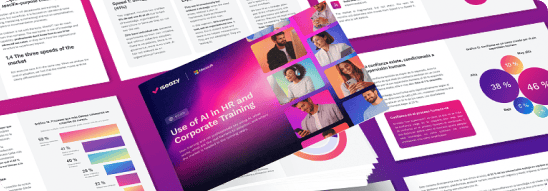
Download the free study, developed in collaboration with Microsoft, and discover the insights.

March 26, 2026

CONTENT CREATED BY:

Table of contents
Cooperation in the workplace is the ability of an organization’s members to coordinate efforts, share resources, and support each other toward a common goal. When managed well, it doesn’t just improve results: it creates an environment where people work better, learn more, and stay longer with the company.
In this article you’ll find what fostering cooperation really involves, why it matters, which strategies work in practice, and how training can become one of the most powerful levers for consolidating it.
Cooperation in the workplace is the active and sustained willingness of each member to coordinate efforts, share resources and information, and support the rest of the team toward a common goal. It is not a spontaneous behavior: it requires an organizational culture that enables it, leadership that models it, and, often, specific training in the skills that make it possible.
Although used as synonyms, there are important nuances. Cooperation means each person performs their part relatively independently to contribute to the overall result: it is coordinated task division. Collaboration, on the other hand, involves simultaneous joint work where members influence each other during the process, co-creating the solution.
In practice, high-performance teams need both: cooperation for day-to-day operational efficiency, and collaboration for innovation and complex problem-solving. The most common mistake in organizations is confusing one with the other and designing dynamics that foster only one of the two.
Genuine cooperation doesn’t emerge on its own. The main obstacles are structural (incentive systems that reward individual achievement) and cultural (distrust, departmental silos, lack of cross-functional communication). That is why the most effective strategies simultaneously address organizational design, culture, and competency development.
When employee collaboration is achieved correctly, it generates a solid workforce. Beyond creating a healthy and balanced work environment, it increases productivity levels and employees feel enthusiastic about their work.
Data supports this intuition: according to Gallup‘s State of the Global Workplace 2023 report, organizations with high levels of cooperation and engagement record up to 21% more profitability and 17% more productivity than those with disconnected teams. Meanwhile, McKinsey‘s Collaboration Index 2022 report estimates that improving internal collaboration can increase productivity by 20% to 25%.
For this reason, cooperation together will help achieve the company’s overall objectives more quickly and efficiently. In this sense, it is not only essential that each member fully understands the goals to be reached, but also remains focused on achieving them with a group perspective.
Beyond subjective perception, there are concrete indicators that allow you to assess the real state of cooperation: on-time project completion rate, participation level in feedback sessions, voluntary turnover rate (cooperative teams retain talent better), results from workplace climate surveys, and collaborative learning metrics if you use an LMS platform.
The following table summarizes the main strategies for fostering cooperation, with an assessment of expected impact, implementation cost, and the key tracking indicator:
| Strategy | Impact level | Success indicator |
|---|---|---|
| Open communication and formal channels | High | % employees who feel heard |
| Shared goals and team OKRs | High | Group objectives achievement rate |
| Recognition and performance appreciation | Medium-High | Satisfaction index and internal NPS |
| Active diversity and inclusion | Medium | Participation rate in cross-functional initiatives |
| Team building and cohesion dynamics | Medium | Interpersonal trust (climate survey) |
| Collaborative learning and joint training | High | Completion rate and transfer to the job |
Promoting collaboration among your employees will create more proactive profiles, drive innovation in your company, and people will feel motivated by their assignments. That is why it is important for each member to understand the direct impact of their work on that of their colleagues.
This way, employees understand the importance of their participation in achieving the team’s objectives. To promote these actions, keep the following in mind:
Create communication channels in your company and promote spaces where people can express their opinions and ideas. This is one of the most effective ways to encourage participation and teamwork.
It is important that the workplace feels open and flexible, and that people feel heard and their participation is taken into account. This, in addition to fostering a space of trust, will generate a sense of belonging for each member of your team and, therefore, they will naturally engage in group tasks.
Make sure every member knows what is expected of the team and is aligned with it. In addition, set timelines and priorities to offer a clear and concrete overview that will drive team collaboration and avoid conflicts or confusion.
One of the best practices companies have to foster team participation is recognizing employee performance. We all like to feel that our efforts are valued, so foster a culture that recognizes and appreciates the work of its employees.
Each person brings particular value to a company, and keeping this in mind can help you foster team participation. Highlight the strengths of each of your employees and show them how their skills, perspectives, and experiences add specific value within their teams. Leveraging diversity to tackle contingencies can bring different perspectives and lead to creative solutions.
One of the most undervalued elements in building cooperative teams is joint training. When employees learn together — whether through interpersonal skills programs, communication workshops, or shared e-learning platforms — they don’t just acquire competencies: they also build mutual trust, a common language, and a sense of team. Training platforms such as isEazy LMS allow you to design group training programs using a catalog of over 600 courses in power skills such as leadership, communication, and emotional intelligence, aligned with business objectives.
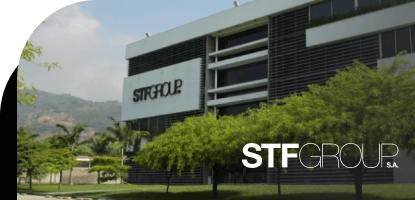
STF Group, a professional services company, used isEazy Skills to develop a leadership and team cohesion program that achieved an 87% completion rate and notably improved alignment among their management teams. Discover how they did it →
CASE STUDY
We helped STF Group achieve an 87% completion rate in its leadership program


There are many advantages that come from fostering team collaboration. Far from being vague benefits, reference studies in people management quantify them clearly:
There are various ways to promote participation among the people in your company. Discover which ones can be applied to the objectives you have in mind. These are some of the main strategies to achieve it:
This strategy, one of the most common, remains relevant because it generates very favorable results. As its name suggests, it allows you to “build teams” through different dynamics. This activity usually breaks the rigidity of work and gets people to relax and enjoy themselves, which will naturally foster team participation.
Let your imagination run free! Create games, organize a themed day, form teams made up of people from different areas, set challenges, and reward efforts. With this strategy you will achieve greater integration in your company and increase interaction and trust among everyone.
As mentioned earlier, in addition to setting the company’s global objectives and goals for each area and/or work team, it is important to hold meetings to track progress. This way, you can promote the active participation of your employees, and if necessary, set new goals or find group solutions if there was any problem along the way.
One of the most prominent strategies that promotes participation is collaborative learning. You can create a space where each individual shares their skills, knowledge, and concerns, so that knowledge is shared and joint collaboration is promoted.
Frequent feedback — both from management to the team and between peers — creates a continuous improvement cycle. More than an annual performance review, what builds real cooperation is regular, specific, development-oriented feedback.
The rise of hybrid and remote work has radically transformed the conditions under which cooperation takes place. When teams don’t share the same physical space, informal cohesion mechanisms disappear: hallway conversations, coffee breaks, non-verbal communication. This requires actively designing the channels and rituals that used to emerge on their own.
Although team collaboration is expected to be positive, we must keep in mind that working with people can sometimes be complex. We recommend analyzing the causes of obstacles and addressing them as they arise. In general terms, we recommend:
Encourage feedback
When following up on team dynamics, create a space to give each person feedback on their performance. This will strengthen communication and your employees will know what to work on and how to improve. You will also be able to listen to their experiences and offer solutions to improve group participation methods.
Mediation and conflict resolution
If disagreements arise, having an impartial mediator can help you find equitable solutions and restore harmony in your team.
Flexibility with strategies
If a dynamic didn’t get the response you were looking for, don’t let frustration take over. It is better to show an open attitude and reset the ways to encourage the active participation of your collaborators.
This table summarizes the main obstacles to cooperation and the concrete actions to overcome them:
| Obstacle | Warning sign | Recommended action |
|---|---|---|
| Lack of interpersonal trust | Excessive formal communication, avoidance of feedback | Team building, mutual knowledge dynamics |
| Individual goals over collective ones | Internal competition, silos between departments | Review of incentive system, shared OKRs |
| Poor communication | Frequent misunderstandings, lack of transparency | Formal channels + open communication culture |
| Lack of training in collaborative skills | Difficulty giving/receiving feedback, low empathy | Soft skills training focused on cooperation |
Tools don’t create cooperation on their own, but they can either facilitate or hinder the conditions for it to happen. The key is choosing the right ones for each need and, above all, training the team in their collaborative use. Here are the main categories:
Tools like Slack, Microsoft Teams, or Google Workspace create agile and transparent communication channels. They are the basic infrastructure of any cooperative team, both in-person and remote. Their value lies not in the tool itself, but in the usage norms the team establishes: when to use each channel, what to communicate asynchronously, and how to escalate when there are blockages.
Tools like Asana, Trello, Jira, or Monday give visibility to everyone’s work, clarify responsibilities, and allow tracking of collective progress. When everyone can see the board, it becomes easier to understand how one’s own work impacts that of others — which is precisely the cognitive lever that activates cooperation.
Often overlooked in this category, learning platforms are first-rate cooperation tools. When a team learns together — through shared training pathways in soft skills like communication, leadership, or emotional intelligence — they don’t just acquire competencies: they build trust and a common language.
isEazy Skills offers the most complete power skills catalog on the market in microlearning format, with the ability to assign group pathways to entire teams. Ideal for organizations that want to work on cooperation through training, with collective and individual progress metrics.
Features
Advantages
Ratings
Classic – 50-70 minute courses featuring an interactive structure with high-impact videos and multimedia resources.
Essential Facts – 15-20 minute short courses with focused content designed to address specific problems in a short timeframe.
Podcast training – for learning anytime, anywhere.
Features
Classic – 50-70 minute courses featuring an interactive structure with high-impact videos and multimedia resources.
Essential Facts – 15-20 minute short courses with focused content designed to address specific problems in a short timeframe.
Podcast training – for learning anytime, anywhere.
Advantages
Ratings
Platforms like Lattice, Leapsome, or 15Five structure peer-to-peer and manager feedback cycles. Regular recognition of others’ work — visible to the whole team — is one of the most powerful activators of sustained cooperation.
Miro, Mural, or FigJam are collaborative digital whiteboards that allow distributed teams to co-create together in real time: ideation workshops, retrospectives, process maps. They replicate the in-room whiteboard experience for remote teams.
If you want to develop your professionals’ skills to build a cohesive team that works toward the same goal, isEazy Skills gives you access to the most complete catalog of power skills and digital competency courses and programs. From effective communication and leadership to emotional intelligence and conflict management: all the training a team needs to cooperate better, available in microlearning format adapted to your organization’s pace.
Want to learn more about trends in soft skills training? Discover how other organizations are already using training to build more cooperative teams and achieve their goals.
Cooperation in a work team is the active and sustained willingness of each member to coordinate efforts, share resources and information, and support the rest of the team toward a common goal. It goes beyond simple coordination: it requires mutual trust, fluid communication, and a culture where collective success is prioritized over individual achievements. In corporate environments, cooperative teams solve problems faster, generate more innovation, and report higher levels of engagement and job satisfaction.
Fostering cooperation in a high-performance team is crucial for achieving common goals efficiently. Proper collaboration creates a healthy and balanced work environment, increasing employee productivity and motivation. According to Gallup’s State of the Global Workplace 2023 report, teams with high levels of cooperation record up to 21% more profitability and 17% more productivity. By working together toward a shared goal, teams achieve a synergy that enhances results and strengthens overall performance.
To foster team participation, it is essential to know your team members in order to identify their strengths and areas for improvement. It is also key to promote a shared goal, prioritizing collective interests over individual ones. Equally important is building trust and a positive work environment. From a training perspective, skills such as assertive communication, emotional intelligence, and collaborative learning have the greatest impact on team cohesion.
A company can promote cooperation and teamwork through open and effective communication, creating channels where employees can express their ideas. Similarly, through shared goals that align all team members. It is also fundamental to recognize and value employee performance to foster a culture of appreciation, and to leverage each person’s unique perspectives to drive innovation. Joint training through skills development programs reinforces these mechanisms in a sustained way.
Fostering cooperation in the workplace offers multiple benefits. Companies with collaborative cultures experience greater productivity and a positive work environment. In addition, cooperation enables more effective problem-solving, as teams combine different perspectives to find creative solutions. It also contributes to innovation, individual and group professional growth, and the development of essential soft skills such as communication, empathy, and resilience.
Several strategies can be used to foster collaboration. Team building sessions create bonds and energize team integration. Regular check-in meetings align objectives and give everyone a voice. Collaborative learning is especially powerful: when employees learn together — through power skills training programs like those offered by isEazy Skills — they simultaneously strengthen their competencies and their bonds as a team.
Although used as synonyms, cooperation and collaboration have distinct nuances. Cooperation means each person performs their part independently to contribute to the overall result (division of tasks with a shared goal). Collaboration, on the other hand, involves simultaneous joint work where team members influence each other during the process, co-creating the solution. In practice, high-performance teams need both: cooperation for operational efficiency, and collaboration for innovation and complex problem-solving.

WHITEPAPER
Discover the power skills that will transform your company
Download whitepaper

Enhance your team's skills with isEazy Skills
Discover how isEazy Skills can transform your team’s skills with high-impact courses

Enhance your team's skills with isEazy Skills
Discover how isEazy Skills can transform your team’s skills with high-impact courses