CASE STUDY
We helped STF Group achieve an 87% completion rate in its leadership program

Author
The #1 AI-powered authoring tool on the market

Factory
Custom e-learning content factory

Skills
Comprehensive power skills course catalog

LMS
All-in-one LMS platform with AI

Engage
App for managing frontline teams

Game
Gamification app for business
FEATURES

AINew
Unlock your full potential and speed up course creation with artificial intelligence.

Accessibility
Automatically meet accessibility guidelines—without sacrificing interactivity!

Interactivity
Boost engagement with interactive, ready-to-use activities that make learning fun.

Course Creation
Reduce the time it takes to create your e-learning courses with our authoring tool.

Distribution
We offer you different distribution options, so that nothing can stop you.

SCORM
Publish your course in SCORM format and share it on any LMS.
SERVICES

Instrucional Design
Surprise your students with multimedia and interactive content.

Custom Courses
We create e-learning courses for you—tailored to your needs and hassle-free!

Virtual Reality
Turn learning into an immersive experience.

Custom Avatars
Give your courses and videos a unique touch with personalized avatars.

Audiovisual FactoryNew
Turn training into something dynamic and visual with engaging videos.
CATALOG
Course catalog
Over 600 skills and competency courses to help you adapt to your team's needs.

Microsoft Copilot AcademyNew
Your professionals will learn how to apply Copilot AI to key processes within your organization.
Artificial Intelligence Academy
Train your teams in the practical use of AI to boost productivity and innovation in your company.

Cybersecurity Academy
Capacita a tu empresa con el catálogo más completo en seguridad digital corporativa.
FEATURES

Quizzes & Games
Turn your training into an engaging Q&A game.

Challenges & Competitions
Enhance learning through friendly peer challenges.
Rewards & Incentives
Motivate employees with points, levels, and leaderboards.
Social & Collaborative
Strengthen team connections with interactive social dynamics.

KPIs & Analytics
Track and optimize your training initiatives instantly and effortlessly.

Use cases
Choose the solution that best fits your needs

Industries
Solutions for all types of industries
USE CASES
Onboarding
Facilitate the onboarding process, productivity and engagement of your new employees.
Upskilling
Boost your team's skills and prepare them for the challenges of the future with upskilling.
Microlearning
Discover all the advantages of microlearning and boost your training results.
Gamification
Enjoy addictive training that will get your professionals hooked.

Internal Communication
Improve communication in your company and enjoy an aligned and committed team.

Mobile learning
Agile, flexible, and interactive learning—built for today’s digital-first workforce.
INDUSTRIES

Banking and financial services
Training in compliance, cybersecurity, customer service, and key skills development.

Pharmaceuticals and healthcare
Digital onboarding, regulatory updates, and ongoing training for healthcare staff.

Retail and consumer
Agile and scalable training for in-store, operational, and customer service teams.

Industry and manufacturing
Training in processes, safety, and corporate culture for distributed teams.

Education and training
Digital solutions for training centers, internal academies, and corporate universities.

Technology and telecommunications
Development of technical talent, digital skills, and upskilling and reskilling programs.
CLIENTS

MAPFRE
How MAPFRE turn e-learning into sales with isEazy

Pepco
A personalised learning experience for a growing team.

BBVA
Digitisation and creation of high quality e-learning content.

Shiseido
We increase the engagement of the training with a social and gamified app.

Telefónica
Large-scale reskilling for the company's digital transformation.

Vodafone
A personalised learning experience for a growing team.
More than 1,000 companies already rely on isEazy.





MEET ISEAZY

News
Find out the latest news about isEazy: press releases, partnerships, updates...

Contact
Leave us your personal details and we will contact you as soon as possible.
About isEazyNew
Find out more about our company.
Careers
We are looking for the best talent, join our team!

Partners
Become our partner and grow your business.
INTERESTING RESOURCES

Blog
The best content on e-learning: trends, tools and key strategies.
Whitepapers
Gain valuable insights and stay ahead of industry trends.
Product releases
The latest news and releases of our e-learning products and solutions.

Glossary
Definitions of the most commonly used terms and key industry concepts.
Guides
Discover the best step-by-step tips and tricks to optimize your L&D strategy.
Webinars
Video sessions on our products, trends and more

Comparatives
Compare e-learning solutions available on the market and choose the most suitable one.

STUDY
Download the free study, developed in collaboration with Microsoft, and discover the insights.

March 17, 2026

CONTENT CREATED BY:

Table of contents
Knowing how to effectively supervise your team is one of the factors that has the greatest impact on business results and on employees’ professional development. However, many team leaders do it intuitively, without a clear method that allows them to adjust the intensity, timing, and type of conversation based on each person’s profile.
In this article, you will find the steps, key principles, and KPIs needed to supervise your team rigorously without falling into the most common mistakes.
Supervising a team is the process by which a manager monitors employees’ performance, progress, and well-being, with the goal of ensuring that both individual and collective results are aligned with the organization’s objectives. It is not about controlling, but about supporting, guiding, and facilitating each person’s development within their context.
When supervision is done well, the effects are tangible:
The State of the Global Workplace 2024 report by Gallup reveals that 70% of the variation in a team’s engagement level is directly explained by the quality of its manager. This is no minor detail: teams led by managers who practice active and structured supervision show up to 43% lower turnover rates and significantly higher productivity compared to teams with poor or nonexistent supervision.
From an L&D and Human Resources perspective, this has a direct implication: supervision cannot be separated from continuous learning. A manager who truly follows up with their team can accurately identify which skills need to be strengthened, which individuals are ready to take on new challenges, and where there are bottlenecks that training can solve. When done well, supervision is the foundation of any effective upskilling or reskilling strategy.
You do not supervise an employee with proven experience in the same way as someone who has been in the role for three months. The most common mistake is applying the same level of intensity and the same format to every member of the team. These are the key behaviors at each stage:
The following table provides a practical guide to adjusting the frequency and type of supervision based on the employee’s profile. It is not a fixed rule, but rather a starting point that each manager should adapt to their context:
| Employee Profile | Recommended Frequency | Type of Conversation |
|---|---|---|
| New to the role or the company | Weekly or biweekly | Guidance, support, answering questions |
| Mid-level experience, variable performance | Biweekly or monthly | Goal review, identification of obstacles |
| Veteran with consistent performance | Monthly or quarterly | Recognition, new challenges, professional development |
| High potential in growth phase | Biweekly | Development feedback, career plan, increasing autonomy |
| Employee with performance difficulties | Weekly | Improvement plan, close follow-up, training support |
Beyond operational steps, these are the strategic levers that make the difference between supervision that drives results and supervision that only generates reports:
Objectives that are not communicated do not exist. For a team to perform well under supervision, goals must be specific, measurable, achievable, relevant, and time-bound (SMART methodology). But above all, they must be shared: each employee should clearly understand what is expected of them and how they contribute to the team’s outcomes.
A common mistake is setting goals at the beginning of the year and not reviewing them until the annual evaluation. Effective supervision involves regularly tracking progress and making adjustments when the context changes.
Supervision is not a one-way conversation from the manager. Creating real communication channels, where employees can express difficulties, propose improvements, or ask for support without fear, is the foundation of effective supervision. A climate of trust reduces the time needed to detect problems and improves the quality of the information that reaches the manager.
Good supervision does not mean doing everything yourself. It means understanding the skills and strengths of each team member and assigning tasks where they can add the most value. Effective delegation not only reduces the manager’s workload but also empowers employees and accelerates their development. The key is to delegate with clarity: what is expected, by when, and with what level of autonomy.
Supervision based solely on perceptions or physical presence is subjective and ineffective. Using objective performance metrics and indicators enables better decision-making, helps detect trends before they become issues, and allows for concrete and actionable feedback. In the next section, you will find a table with the most useful KPIs to measure the effectiveness of your supervision.
A manager who only supervises the present but does not invest in the future of their team is managing for the short term. Continuous development—through training, mentoring, or progressive challenges—is what transforms a competent team into an outstanding one. With isEazy Skills, team leaders can boost the development of soft and digital skills through a catalog of more than 250 interactive courses, accessible from any device and directly aligned with business objectives.
How do you know if you are supervising effectively? The answer lies in the data. These are the key indicators that every team leader should regularly monitor to evaluate the quality and impact of their supervision:
| KPI | What it measures | Recommended frequency |
|---|---|---|
| Goal achievement rate | % of targets achieved during the evaluated period | Monthly / quarterly |
| Team engagement level | Motivation, sense of belonging, and job satisfaction | Quarterly (survey) |
| Voluntary turnover rate | Unplanned exits as a symptom of leadership issues | Quarterly / annually |
| Issue resolution time | Team agility to detect and solve problems | Monthly |
| Training completion rate | Team commitment to their own development | Per training activity |
| KPI | What it measures | Recommended frequency |
|---|---|---|
| Quality of feedback received | Employee perception of the usefulness of performance conversations | Semiannual |
| Absenteeism rate | Indirect signal of disengagement or workplace climate issues | Monthly |
| Progress in individual development plan | Progress on growth goals agreed with the employee | Quarterly |
| Internal team NPS | Likelihood of employees recommending the team or company | Semiannual |
Understanding the most common supervision mistakes is just as important as knowing best practices. These are the three that have the greatest negative impact on results and team climate:
Over-supervising—monitoring every detail, requesting constant updates, and not allowing employees any decision-making space—is the most destructive mistake for team motivation and autonomy. Micromanagement conveys distrust, creates dependency, and hinders professional development. The solution: adjust the frequency of supervision based on each person’s level of experience and results (see the profile table above) and delegate with clear expectations.
Many managers hold supervision conversations, identify problems, and agree on action plans… that are never reviewed. Supervision without follow-up is supervision without impact. The solution: document the commitments made in each conversation and dedicate the first few minutes of the next one to reviewing progress. Consistency is what gives credibility to the process.
It is impossible to supervise effectively if objectives are not clear or have become outdated due to changes in context. Supervision without a clear reference of expectations turns into a subjective conversation that creates frustration on both sides. The solution: review objectives at the beginning of each supervision cycle and adjust them if the context has changed. The KPIs in the previous table provide the objective framework for this discussion.
STF Group is a real example of how a well-executed leadership training strategy can transform team results. With isEazy, they achieved an 87% completion rate in their corporate leadership program, turning supervision and manager development into a strategic business lever. Discover how they did it →
CASE STUDY
We helped STF Group achieve an 87% completion rate in its leadership program



Supervising a team is not about overseeing every task, but about creating the conditions for each person to perform better, grow, and contribute to business objectives. The difference between a team that simply delivers and one that truly excels often lies in the quality of its supervision.
When there is a clear method—defined goals, structured follow-up, meaningful feedback, and metrics that guide decisions—supervision stops being an operational task and becomes a competitive advantage.
This is where training comes into play. A manager who supervises effectively can identify needs, but also requires the right tools to act on them. Investing in continuous team development is what enables sustainable results over time.
With isEazy Skills, you can drive that development through a catalog of more than 600 courses designed to build key leadership, communication, and productivity skills in a practical way, directly applicable to the team’s day-to-day work.
Supervising employees within a team is crucial because it ensures that the group’s goals and objectives are aligned with those of the organization. Effective supervision strengthens teamwork, increases efficiency and productivity, supports employees’ professional and personal development, boosts motivation and sense of belonging, and enables early identification of potential issues.
To effectively supervise a team, several key steps should be followed: adjust the level of supervision based on the employee’s experience and performance, maintain consistency in supervision timelines, review work progress before meeting with the employee, ask questions first to understand their perspective, explore any challenges they may be facing, confirm that the direction of work and deadlines are appropriate, and provide a level of trust without micromanaging.
Leaders should consider several key factors for successful supervision, including setting clear goals and objectives, maintaining effective communication, delegating tasks and assigning responsibilities, monitoring and tracking team performance, and fostering team development. These strategies help maximize overall performance and productivity.
To establish clear goals and objectives, they must be specific, measurable, achievable, relevant, and time-bound. These goals serve as a reference point to evaluate team progress and make necessary adjustments, ensuring that all team members are working toward a common objective.
Communication plays a fundamental role in team supervision. It is essential that communication among team members and between them and their manager is assertive and clear. Creating open channels for dialogue and fostering a culture of trust are critical for effective supervision, as they enable continuous feedback and a shared understanding of expectations and goals.
Enhancing team development is key to ensuring business success. This can be achieved by strengthening both team skills and leadership capabilities. With tools like isEazy Skills, organizations can take their team’s talent to the next level through a comprehensive catalog of soft and digital skills courses, enabling professionals to acquire relevant and up-to-date knowledge for today’s market.

WHITEPAPER
Discover the power skills that will transform your company
Download whitepaper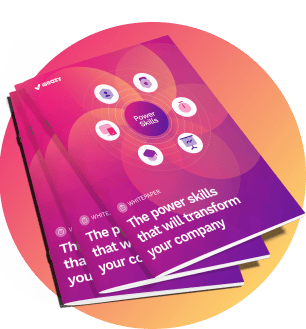

Enhance your team's skills with isEazy Skills
Discover how isEazy Skills can transform your team’s skills with high-impact courses

Enhance your team's skills with isEazy Skills
Discover how isEazy Skills can transform your team’s skills with high-impact courses